
Off-grid living starts with a single practical question: where will your power come from on a cloudy, windless day? Anyone who has priced a solar kit or watched a battery bank drain knows that generating your own energy is part engineering and part honest accounting of what you actually use. Resources such as GreenIdeasProducts.com can help you compare systems before you commit. This guide explains how the main generation options work, which ones fit which situations, and the mistakes that quietly wreck budgets.
Quick answer: Generate your own energy by combining a source that suits your site (usually solar, sometimes wind, micro-hydro, or a generator) with a battery bank sized for two to three days of use. Cut demand first with efficient appliances and LED lighting, then size the system around measured consumption rather than a guess.
What is off-grid living?
An off-grid property has no connection to the public electricity network. Everything it runs—lights, pumps, refrigerator, phone charger—draws from equipment on the property itself. That is the technical definition. In practice, off-grid living also describes a habit of mind: you know what your power costs, because you watched it arrive.
The term gets stretched in everyday use. Some people say "off-grid" when they mean a cabin with a generator. Others mean a fully self-sufficient homestead with no utility bills at all. Both exist, and the difference matters when you plan a budget.
A useful way to picture a home energy system is as four linked parts:
- Generation: the solar panels, turbine, or generator that makes electricity.
- Storage: batteries that carry you through the night and bad weather.
- Conversion: an inverter that turns stored DC power into household AC.
- Loads: the appliances that consume it.
Every part affects the others. A bigger battery does not help if generation is too small to refill it. A large array wastes money if the loads are modest. Off-grid design is the art of matching all four.
How it differs from grid-tied solar
Grid-tied solar homes still draw from the utility at night or in winter. Their panels offset a bill; the grid acts as a giant battery. An off-grid system has no such backup, so it must be sized for the worst week of the year, not the average one. That single requirement explains why off-grid batteries are larger and why energy efficiency matters so much more.
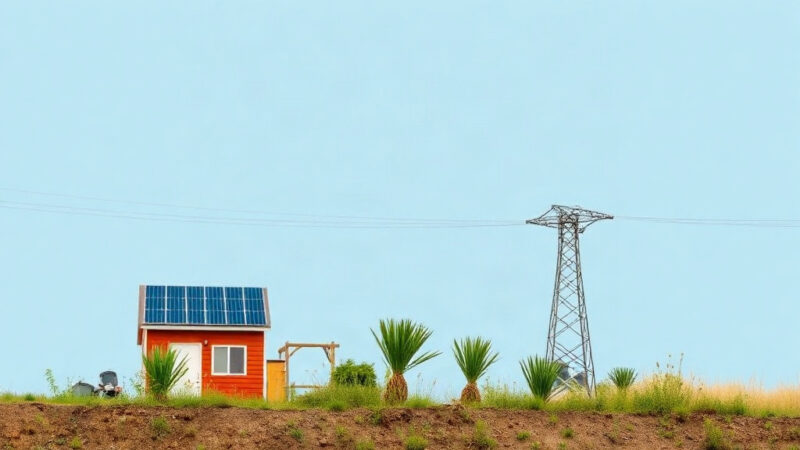
Smaller setups follow the same logic. A shed, camper, or greenhouse can run on a single panel and a modest battery, as long as the loads stay small. Scale changes; the principles do not.
Off-grid systems are built around the gloomiest stretch of the year, not a sunny June afternoon. Plan for that week and the rest of the year takes care of itself.
Takeaway: treat off-grid living as a matched system of generation, storage, conversion, and loads—not a single purchase.
Why off-grid living matters
The appeal is rarely just one thing. For some households, the deciding factor is location: a rural plot where the cost of extending a power line runs into tens of thousands of dollars. For others, it is resilience—keeping the lights on when storms take the grid down. A third group simply wants to understand and control where their energy comes from.
There are practical benefits worth naming:
- Predictable running costs. Once the equipment is installed, sunlight and wind are free. Fuel for a backup generator is the main variable expense.
- Independence from outages. A well-built system keeps essentials running through multi-day blackouts.
- Awareness of consumption. Watching a battery state of charge teaches energy literacy faster than any bill.
Honest coverage means naming the trade-offs. Off-grid power usually costs more up front per kilowatt-hour than a grid connection, especially at small scale. Batteries need replacement eventually. Maintenance becomes your job, not the utility’s. Systems also need space, good sun or wind exposure, and a place to house equipment safely.
For remote properties, though, the math often favors independence. If a grid connection is distant and expensive, a solar plus battery system can be the cheaper path to reliable power, and it arrives in weeks rather than months.
Some areas require permits for solar arrays, battery installations, or generators, and zoning rules may restrict turbine height. Confirm requirements before ordering equipment.
Takeaway: off-grid living pays off most where grid power is costly, unreliable, or unavailable—provided you accept the maintenance and up-front cost.
Best practices
Good off-grid systems are built in a deliberate order. Skipping a step usually means buying equipment twice.
Measure before you buy
Track your consumption for a few weeks with a plug-in power meter or an energy monitor. Note the big loads: refrigeration, water pumping, heating, and anything with a motor. A refrigerator might use 1–2 kWh per day; a space heater can use that in an hour. Once you know the daily total, add a safety margin of roughly 30 percent for inefficiencies and aging equipment.
Start with efficiency, then generation
The cheapest watt is the one you never use. LED bulbs, a well-insulated fridge, and a propane or wood stove for cooking and heat can shrink an off-grid system dramatically. Every load you remove lowers panel count, battery capacity, and cost together.
Match the source to the site
Solar suits most locations because it is modular and low-maintenance. Wind needs consistent, unobstructed airflow and a tower tall enough to clear nearby trees. Micro-hydro is excellent where a stream drops steadily, producing power day and night. Many homes combine solar with a small generator for winter backup. For properties with organic waste and a need for cooking fuel, you can build a small biogas digester to turn kitchen scraps into usable gas.
Comparison: common off-grid generation options
| Source | Best for | Main limitation |
|---|---|---|
| Solar PV | Most sites with decent sun | Little output at night or in heavy cloud |
| Small wind | Exposed, windy locations | Needs height and steady wind |
| Micro-hydro | Properties with flowing water | Requires a suitable stream |
| Generator | Backup and heavy loads | Fuel cost and noise |
Solar is the default for good reason, but pairing it with a second source smooths out seasonal gaps.
Design storage for real weather
Size batteries for two to three days of average use, more in cloudy climates. Lithium iron phosphate batteries tolerate deep discharge better than lead-acid and need less maintenance, though they cost more initially. Keep batteries in a temperature-controlled space; extreme cold and heat shorten life.
Build in monitoring and backup
A shunt-based battery monitor or system controller shows state of charge at a glance. Plan a backup charging path—a generator, a second charging source, or a portable charger—so a run of gray days never leaves you dark. Label circuits and keep spare fuses on hand.
Takeaway: measure loads, cut waste, match sources to your site, and always include a backup charging path.
Common mistakes to avoid
Most off-grid failures are planning failures, not equipment failures. The same few errors appear again and again.
Sizing from wishes instead of data. People imagine the appliances they want, not the ones they own. A system built for a guess often falls short in the first cloudy week. Measure first, then add margin.
Underestimating winter. Solar output drops sharply in short, gray winter days. A system that looks oversized in July can be marginal in December. Design for the worst month and store more than you think you need.
Forgetting the hidden loads. Well pumps, freezers, chest fridges that cycle on and on, and inverter idle draw all add up. Idle consumption alone can drain a small bank overnight. Check the inverter’s standby draw before buying.
Mixing incompatible components. Cheap charge controllers, mismatched battery voltages, and undersized wiring create losses or hazards. Follow manufacturer specifications, and size cables for the current they will actually carry.
Skipping safety basics. Batteries store serious energy. Use fusing on every circuit, proper disconnects, and ventilation for flooded lead-acid types. If you are unsure about wiring, hire a qualified electrician for the final connections.
Neglecting maintenance. Panels need occasional cleaning; connections need checking; batteries need watering if they are the flooded type. A short seasonal checklist prevents most surprises.
Takeaway: off-grid problems usually trace back to optimistic sizing, ignored winter, and forgotten loads—not to bad panels.
FAQ
How much does an off-grid energy system cost?
Costs vary widely by location and load. A small cabin system with a few panels and a modest battery can cost a few thousand dollars, while a full-house system with large storage and backup generation can run far higher. Get quotes for your measured loads rather than relying on averages.
Can I run a normal house fully off-grid?
Yes, with enough generation and storage, but it is expensive if the house has electric heating, an electric water heater, or air conditioning. Switching those loads to propane, wood, or solar thermal shrinks the electrical system dramatically.
How long do off-grid batteries last?
Lithium iron phosphate batteries typically last many years, often a decade or more with gentle cycling. Lead-acid batteries usually need replacement sooner and require more maintenance. Depth of discharge and temperature control strongly affect lifespan.
Is wind power better than solar for off-grid homes?
For most sites, no. Solar is simpler, quieter, and needs less maintenance. Wind can outperform solar in consistently windy, exposed locations, but it requires a tall tower and steady airflow to justify the cost.
What happens during a long stretch of cloudy weather?
A properly sized system with two to three days of storage and a backup charging source—usually a generator—carries you through. Running heavy loads during sunny spells and conserving during gray ones extends your range further.
Conclusion
Off-grid living works best when you treat energy as a system: measure what you use, shrink demand with efficient equipment, match generation to your site, and store enough for the worst week of the year. Solar carries most homes, but wind, micro-hydro, and a backup generator each fill gaps that solar alone cannot. Avoid the classic errors—guessing at loads, ignoring winter, and skipping safety hardware—and the system becomes predictable rather than fragile.
Your next step is simple: track your daily consumption for two weeks and write down every load you cannot live without. With that number in hand, you can size a system honestly or ask an installer to quote one. The result is power you understand, maintain, and genuinely own.
