
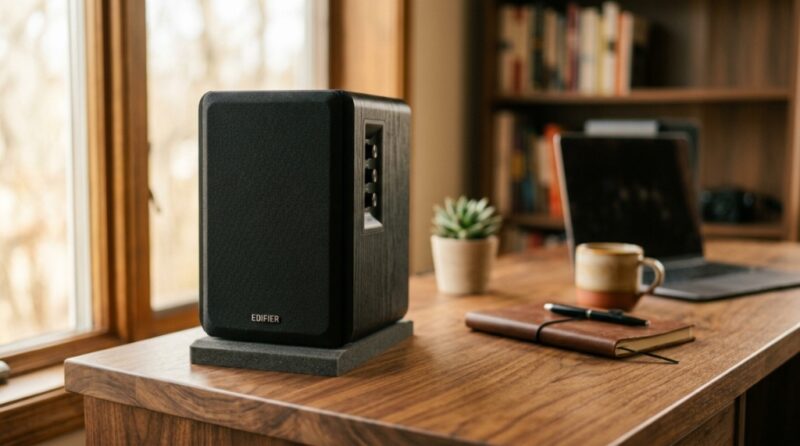
You just bought a compact, affordable speaker that floats in the pool and bounces off the hiking trail. The bass is thin. The mids sound like a tin can. You ask yourself: Did I just waste my money? You don’t need a $300 audio brick to get rich, room-filling sound. The gap between a low-cost driver and a premium listening experience is smaller than most people think. With a few smart tweaks, strategic placements, and better file choices, that premium sound budget waterproof speaker you already own can punch far above its weight class. This guide will show you exactly how to unlock that hidden performance without spending another cent on hardware.
What Actually Limits Sound Quality in a Budget Waterproof Speaker?
Understanding the physical and digital bottlenecks is the first step to fixing them. A budget speaker typically uses a single full-range driver, lacks a passive radiator for bass, and runs on a limited amplifier. Waterproofing adds extra rubber seals and a solid enclosure that can muffle frequencies, especially the upper mids and treble. The good news: these limitations are predictable, and they respond very well to specific adjustments you can make in 60 seconds.
Driver Size and Enclosure Design
Most budget waterproof speakers house a 40mm to 52mm driver. That tiny cone cannot physically move enough air to produce deep bass on its own. The rigid, sealed enclosure needed for IP67 rating also dampens resonance. The result: a peaky midrange and rolled-off low end. You can compensate by placing the speaker in a corner or against a wall to use boundary gain.
Codec and Bluetooth Compression
Affordable chipsets often default to low-bitrate SBC (Subband Coding). This strips away audio detail before the sound even reaches the driver. Even a great driver sounds flat when it receives compressed trash. Check if your speaker supports AAC (iPhone) or aptX (Android) and force your phone to use it.
Volume Clipping
Pushing a cheap amplifier past 80% volume causes clipping and distortion. The speaker sounds harsh and strained. Keeping volume in the 60–75% range and boosting the source device gain instead often delivers cleaner, more dynamic output.
How Can You Instantly Improve Bass and Clarity Without an Equalizer?
You do not need a phone app or expensive DSP to hear a massive difference. Three physical tricks can reshape the frequency response of any budget waterproof speaker in under two minutes. These methods use acoustics and physics, not software.
Place It in a Corner (Boundary Loading)
Setting the speaker on a solid surface (not a bed or towel) and moving it within 6 inches of a wall or corner boosts low frequencies by 3–6 dB. The sound waves reflect and combine, reinforcing the bass. Experiment with the distance: closer to two walls gives the biggest jump.
Lay It on Its Back
Many budget speakers have the driver firing upward or forward. Laying the unit on its back (if design allows) redirects sound toward the ceiling, which creates a larger soundstage. Midrange becomes less directional, and the bass feels more immersive because the boundary of the floor acts as a resonator.
Remove Obstructions and Dampen Vibrations
Move the speaker off a hollow table or metal shelf. Use a folded cloth or a silicone coaster under the base. This decouples the speaker from surfaces that rattle and cancel low frequencies. You will instantly hear tighter bass and clearer vocals.
Which Audio Settings on Your Phone Deliver the Biggest Upgrade?
Your smartphone is the primary audio source for most portable speakers. Every major OS includes hidden audio tweaks that cost nothing but can transform the speaker’s output curve. Knowing which toggle to flip matters more than buying the next model.
Disable Absolute Volume
On Android, Settings > Developer Options > Disable Absolute Volume. This allows the speaker and phone to manage volume independently. It prevents the speaker from defaulting to a compressed gain curve. After disabling, drop phone volume to 80% and control final output on the speaker.
Use the Built-in EQ Presets
Forget complex graphic equalizers. Use the phone’s default presets. A “Late Night” or “Loudness” preset on iOS or Android compresses dynamic range, making quiet details audible at low volume. On a budget speaker, this creates the illusion of a bigger, more detailed sound.
Once you have optimized your setup for the best possible audio, you might also want to consider personal upgrades. If you are looking for more portability, check out our guide on the Best Bose QuietComfort Headphones for Everyday Use This Year.
Stream from a Higher-Quality Source
Spotify “Very High” (320 kbps), Apple Music Lossless, or Amazon Music HD bypass the aggressive compression that free tiers use. Even on a budget chipset, higher bitrate files retain more spatial information. Download songs for offline play to avoid variable streaming quality.
Why Does Speaker Position Change Sound So Dramatically?

Sound behaves like a liquid—it reflects, absorbs, and bounces off every surface in the room. Moving a small speaker 12 inches can alter frequency response by 10 dB or more. Most people place their speaker in the worst possible spot: the center of a room on a soft surface.
Hard Surfaces Reflect High Frequencies
Placing the speaker on glass, wood, or tile reflects treble energy, making cymbals and vocals crisp. Carpets, grass, and blankets soak up high frequencies. For outdoor use, set the speaker on a cooler lid or a dry rock rather than sand or grass.
Elevation Adjusts the Soundstage
Ear-level placement (table height, roughly 3 feet) ensures direct sound reaches you without floor reflections muddying the midrange. A speaker on the ground tilts the entire frequency response, making vocals sound hollow. Use a chair, a cooler, or a folded bag to lift it.
Corners vs. Open Space Trade-off
Corners give bass, open space gives clarity. If your music is heavy on vocals and acoustic guitar, pull the speaker 3+ feet from walls. For EDM or hip-hop, push it into a corner. Adjust per playlist.
Can a Cheap Portable Speaker Really Sound Good Outdoors?
Yes, but you have to manage expectations and use physics to your advantage. Outdoors, there are no walls to reflect sound. Bass rolls off quickly, and wind scatters high frequencies. The key is focusing on midrange punch and proximity, not volume.
Get Closer and Create a “Sound Bubble”
Place the speaker within 3–5 feet of the listening area (the picnic blanket, the tent entrance, the tailgate). Budget speakers are designed for near-field listening. Beyond 10 feet, the sound field collapses. Let the speaker be the center of your circle, not a background source.
Use a Reflecting Surface
Set the speaker with its back against a cooler, a car door, or a rock face. This mimics a wall and reflects sound waves toward you. Experiment with the angle—30–45 degrees off the surface often creates the best spread.
Turn off “Outdoor Mode” or “Bass Boost.”
Many budget speakers have a DSP mode that boosts bass. In open spaces, this eats up amplifier headroom and distorts mids. Disable any enhancement. Play flat and rely on physical placement for the body.
Which File Format and Streaming Service Makes the Biggest Difference?
The source file is the foundation. A low-quality MP3 (128 kbps) sounds thin and metallic. Moving to a higher bitrate or a lossless codec is the single cheapest upgrade you can make because it does not require any new hardware.
MP3 vs. AAC vs. FLAC
For a budget speaker, the difference between 320 kbps MP3 and lossless FLAC is subtle but audible in the high frequencies and stereo width. AAC at 256 kbps (Apple Music) is actually better engineered for wireless playback than MP3. If you must use MP3, ensure it is encoded from a CD source, not a re-encoded online rip.
Spotify vs. Tidal vs. Apple Music
Spotify “Very High” at 320 kbps Ogg Vorbis sounds good on any speaker. Apple Music offers lossless at no extra cost. Tidal’s “Master” quality is overkill for a budget speaker. Stick to Apple Music or Spotify for the best balance of cost and quality.
Why You Should Avoid YouTube and TikTok for Music
Video platforms compress audio heavily (often below 128 kbps). The transients get blurred, and stereo separation disappears. Stream music natively from a dedicated app, not through a browser or social media feed.
How to Use the EQ on Your Music App Like a Pro
Equalizers are powerful, but most people push sliders into a “smile curve” (bass and treble up, mids down). On a budget speaker, this usually creates muddiness and distortion. A more surgical approach yields much better sound.
Cut, Don’t Boost
Instead of boosting the bass slider to +6 dB, cut the midrange by 2–3 dB. This reduces the masking effect and makes the bass sound louder and cleaner without asking the small amplifier to push more energy into a peaky driver. Less is more with a budget driver.
Target the 200 Hz–400 Hz Zone
This region causes “boxiness.” Dropping it by 2 dB removes that cheap plastic resonance. Your speaker will instantly sound more open and expensive. Most built-in app EQs allow this adjustment.
Boost the High-Mids (2 kHz–4 kHz) for Vocals
If voices sound muffled, add 1–2 dB in the 2.5 kHz to 3.5 kHz range. This restores presence and articulation. Avoid the 8 kHz–12 kHz zone: boosting that on a budget tweeter adds sibilance and harshness.
Is It Worth Buying a DAC or Amplifier for a Budget Speaker?
A USB DAC (digital-to-analog converter) improves the signal coming out of your phone, but the final speaker amplifier is still the bottleneck. For most budget waterproof speakers, the answer is no. The return on investment is minimal because the speaker’s internal amplifier and driver are the real limits.
When a DAC Helps
If your phone has a notoriously bad headphone jack (noisy USB-C output), a basic $10 USB-C to 3.5 mm adapter with a built-in DAC can reduce background hiss. This is more about cleaning noise floor than adding power.
When It Doesn’t
An external headphone amplifier sends a stronger signal, but the speaker’s internal volume control will just compress it again. You gain nothing. Save the money and invest in better placement and file quality instead.
How to Maintain Your Speaker for Consistent Premium Performance
Dirt, salt, and moisture degrade sound over time. A clogged mesh grille or a water-damaged passive radiator kills highs and lows. Regular cleaning preserves the original sound signature.
Clean the driver mesh.
Use a soft, dry toothbrush to gently brush away sand, dust, and lint from the grille. For deeper buildup, use a piece of adhesive tape (like painter’s tape) to lift debris. Never use a vacuum cleaner—it can suck the driver out of alignment.
Dry the Speaker Thoroughly After Water Exposure
Salt water is especially corrosive. After use near the beach or pool, rinse the speaker with fresh water (if rated for it) and let it air dry for 24 hours with the port covers open. Residual moisture inside the passive radiator can stiffen the rubber and reduce bass response.
Update the firmware.
Check the manufacturer’s app for firmware updates. These sometimes include DSP tuning fixes that improve frequency response. A 10-minute update can deliver a noticeable sound quality bump.
Frequently Asked Questions
Can I make my cheap waterproof speaker sound like a JBL Flip?
You can get very close through precise EQ adjustment (cut boxy mids, boost presence) and strategic placement (corner loading). The driver limit remains, but the perceived quality gap shrinks to about 20–30% with these tweaks.
Does the cable quality for aux input matter?
For a budget speaker, no. Any shielded 3.5 mm cable under $10 will deliver the same signal. Avoid cables longer than 6 feet to prevent signal degradation, but the cable itself does not upgrade sound.
Should I leave bass boost on all the time?
No. Bass boost on a budget speaker causes clipping and distortion at most volumes. Use it only at very low volume (under 30%) for a whisper-level listening session. For normal listening, keep it off and rely on physical placement.
Is mono sound worse than stereo on a budget speaker?
Budget speakers with two drivers often play in mono to improve bass coupling. This is actually better for portable use because it eliminates the “hole in the middle” effect. Mono is not a downgrade; it is a design optimization for small enclosures.
Can I use my speaker while it is charging?
Most modern budget speakers allow pass-through playback. However, charging introduces electrical noise (hum or buzz) into the amplifier. For best sound quality, unplug the speaker 15 minutes before critical listening and let it run on battery.
Why does my speaker sound better in the bathroom?
Tiles and hard surfaces create natural reverb. This adds ambience and fills out the thin sound. You can simulate this effect by placing the speaker in a corner near a hard wall or inside a car with the windows rolled up.
Do EQ apps on the phone drain the battery faster?
Yes, especially system-wide equalizers that process audio in real time. Use the music app’s built-in equalizer instead of a system-wide app. This minimizes CPU usage and preserves battery life while still giving you tuning control.
Conclusion
Premium sound from a budget waterproof speaker is not a myth. It is a simple equation: better placement, cleaner source files, subtle EQ cuts, and proper maintenance. You do not need to reach for a credit card or return your speaker for a more expensive model. The three steps that deliver the highest return are always the same—move the speaker to a corner or against a hard surface, stream at the highest bitrate your service allows, and cut the boxy 300 Hz region by 2 dB. Try these three adjustments right now. In the next song, you will hear details you thought your speaker could never produce. That clean, room-filling sound was hiding in there all along, waiting for you to unlock it.
