
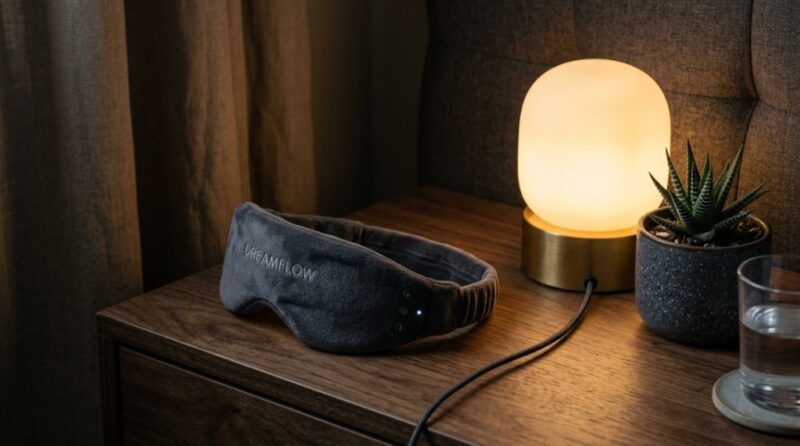
Hotel hallway noise at 2 AM, airplane engine drone for 6 hours, a hostel roommate’s alarm at 5 AM, the unfamiliar sounds of a new city outside your window — travel destroys sleep through unpredictable noise that your brain flags as potential threats, keeping you in light sleep stages that provide zero rest. At home, the same sleeping headphones that rescued your hotel night continue serving as your nightly comfort ritual for partner snoring, neighborhood noise, or simply the white noise that signals your brain, “Time to sleep.”
“Sleeping headphones for travel must survive the specific demands of both environments: compact enough for carry-on bags, durable enough for hotel nightstands and airplane seats, and versatile enough to block both the steady drone of aircraft and the unpredictable spikes of unfamiliar environments while remaining comfortable for the full duration of sleep—whether that is 4 hours on a red-eye or 9 hours at home recovering from jet lag.
What Do Travel Sleep Headphones Need That Home-Only Options Do Not?
Travel sleep headphones require three additional capabilities beyond home use: compact packability (fits in carry-on without bulk or damage), extended battery life (survives overnight flights without mid-air charging), and superior noise isolation (blocks louder, more varied sounds than typical home environments).
- Packability: Home headphones live on your nightstand. Travel headphones share limited luggage space with everything else. Headband styles that fold flat, earbuds in compact cases, or ultra-thin designs that slip into any pocket add zero meaningful luggage bulk.
- Extended battery: A 14-hour international flight plus airport layover plus hotel night can mean 20+ hours between charging opportunities. Travel sleep headphones need a 10–12+ hour battery minimum—or the ability to charge via a portable power bank during transit.
- Superior noise blocking: home bedrooms measure 25–35 dB ambient. Airplane cabins run 75–85dB. Hotel hallways spike to 60–70dB. Travel headphones must mask 30–50 dB more noise than home use requires—demanding either ANC technology, better physical isolation, or louder masking capability.
- Durability for travel abuse: Thrown in bags, compressed under other items, exposed to varying humidity and temperature. Travel headphones need robust construction that survives conditions home-only products never face.
- Quick-charge capability: USB-C fast charging that provides 2–3 hours of use from 15 minutes of charging saves airport layovers when you discover dead batteries before an overnight flight.
Finding the right gear to optimize your routine is heavily driven by digital communities today. It is no longer just big tech sites dictating what we buy; instead, the rise of TikTok micro-influencers has completely changed how we discover niche lifestyle products. Everyday creators are sharing raw, unfiltered reviews of their favorite travel hacks and night-time routines, making it easier than ever to see how these specialized headphones perform in real-world conditions before you buy.
Which Sleep Headphone Style Works Best for Both Travel and Home?
Bluetooth headband sleep headphones provide the best dual-use versatility—they pack flat in luggage (zero bulk), work in all sleep positions on planes and beds, provide 10+ hour battery for long flights, and deliver identical comfort performance at home and in transit without requiring different products for different environments.

| Style | Travel Score | Home Score | Dual-Use Verdict |
|---|---|---|---|
| Bluetooth headband | 9/10 (packs flat, long battery) | 9/10 (comfortable, washable) | Best dual-use option overall |
| ANC sleep earbuds | 9/10 (compact, great noise blocking) | 7/10 (less comfortable for side sleeping) | Best for noise-heavy travel environments |
| True wireless sleep buds | 8/10 (tiny, portable) | 7/10 (may fall out, limited battery) | Good for back sleepers who travel light |
| Over-ear ANC headphones | 7/10 (bulky but best noise-canceling) | 4/10 (too hot and heavy for sleep) | Travel noise blocking only, not for sleep |
The headband wins dual-use because it sacrifices nothing for either environment. It folds flat for packing (takes less space than a pair of socks), provides all-night comfort at home and in transit, and delivers adequate noise masking for both quiet bedrooms and noisy hotels. ANC earbuds win when noise blocking is the absolute priority—but sacrifice side-sleep comfort that headbands maintain.
How Do You Handle Airplane-Specific Sleep Challenges?
Airplane sleep requires addressing three simultaneous challenges: 80 dB engine drone (constant low frequency), unpredictable cabin noise (announcements, passengers, and carts), and an upright sleeping position (different pressure points than lying flat)—solved by combining ANC or strong masking audio with a headphone design that works in semi-reclined positions.
- Engine drone masking: Brown noise at moderate volume effectively masks the constant low-frequency engine sound. ANC headphones cancel this frequency range electronically without requiring audio playback — providing silence rather than masking noise.
- Cabin interruptions: Unpredictable sounds (PA announcements, crying babies, conversation) require either ANC that actively cancels them or masking audio loud enough to cover spikes. Some sleep headphones offer “pass-through” mode that lets critical announcements through while blocking other sounds.
- Upright position comfort: Headband styles that work lying flat also work leaning against headrests and neck pillows. Earbuds with hooks may press uncomfortably against aircraft headrest cushions. Choose designs that maintain comfort regardless of head support angle.
Airplane-specific tip: download masking audio before flight (airplane mode prevents streaming). Apps like MyNoise and White Noise allow offline playback. Ensure your device has adequate storage for 8+ hours of audio files if you cannot stream during a flight.

What Battery Life Do You Actually Need for Travel?
Travel sleep headphones need a minimum of 10 hours of actual playback time—enough for an overnight international flight (8–10 hours) plus pre-boarding use, with a buffer for battery degradation over the product’s lifespan. Claimed 12+ hours provides comfortable margin for real-world use.
- Domestic flights (2–5 hours): Any 8+ hour battery suffices. Charge before departure, use the entire flight, and still have battery for the hotel night.
- International flights (8–14 hours): Need 10–12 hours minimum. If the battery dies mid-flight, you lose sleep protection during the most critical rest hours. Quick-charge capability (2 hours from a 15-minute charge) provides backup if the battery runs lower than expected.
- Multi-day travel without reliable charging: 12+ hours allows two nights of 6-hour use between charges. Or one full night plus half a second night. USB-C charging from portable power banks extends effective runtime indefinitely.
- Battery degradation over time: After 12–18 months of nightly charging cycles, batteries retain approximately 80% of original capacity. A headphone that provided 10 hours new may deliver only 8 hours after a year. Buy it with 20% more battery than you need minimum.
What Should Your Travel Sleep Kit Include?
A complete travel sleep kit contains: your primary sleep headphones (headband or ANC buds), a USB-C charging cable and adapter, backup foam earplugs (in case headphones fail or battery dies), your preferred sleep audio downloaded offline on your phone, and a small carrying pouch that protects headphones during luggage compression.
- Primary headphones: Your tested, proven comfortable sleep headphones that work for both travel and home.
- Charging supplies: Short USB-C cable (6-inch is fine—less tangle), multi-port adapter that works in destination countries, portable power bank for mid-transit charging.
- Backup earplugs: Foam earplugs ($2 for a 10-pack) provide emergency noise blocking if headphones fail, die, or become uncomfortable during unusually long travel days. Weigh nothing, take no space.
- Offline audio: Download 8+ hours of sleep audio before travel. Streaming depends on WiFi availability that hotels and planes may not reliably provide. Apps with offline mode: Calm, Headspace, MyNoise, White Noise.
- Protective pouch: Prevents headband from being crushed or speakers from being pressed by luggage contents. A soft drawstring bag or dedicated case protects your investment from travel abuse.
For budget-friendly sleep headphones tested for both home comfort and travel durability, the best budget sleeping headphones reviewed for versatile use provide dual-environment testing data—confirming which affordable options survive travel demands while maintaining the home comfort that makes them worth owning year-round.
Conclusion
The best sleep headphones for both travel and home use share four qualities: compact packability (adds zero luggage bulk), 10+ hour battery life (survives international flights), comfort in multiple positions (lying flat at home and semi-reclined on planes), and adequate noise masking for environments ranging from quiet bedrooms to 80 dB aircraft cabins. Bluetooth headband styles provide the best overall dual-use experience, while ANC earbuds provide superior noise blocking when that is the dominant priority.
Invest once in headphones that serve both environments rather than maintaining separate home and travel products. The $30–$60 range delivers genuine dual-use capability that handles every sleep situation from your bedroom to a red-eye flight to a noisy hotel in an unfamiliar city. Better sleep travels with you—regardless of where you lay your head tonight.
What is your travel sleep essential—specific headphones, a particular audio track, or another secret weapon? Share your travel sleep system below.
Frequently Asked Questions
Can I use sleep headphones during airplane takeoff and landing?
Rules vary by airline, but most allow Bluetooth headphones during all flight phases (including takeoff and landing) as of current FAA regulations. Wired headphones and devices in airplane mode are always permitted. Check your specific airline’s policy, but Bluetooth sleep headphones are generally approved for continuous use throughout flights.
Will sleep-headphones set off airport security?
No — sleep headphones contain no materials that trigger security alerts. Keep them in your carry-on bag or wear them through security without issues. The small Bluetooth module and speakers are well below any detection thresholds. No need to remove them from bags during screening.
How do I keep sleep headphones clean during travel?
Pack antibacterial wipes and clean headphone contact surfaces every 2–3 nights during travel. Hotels and transit expose headphones to more bacteria than home use. Headband styles: wipe the interior fabric with an antibacterial wipe. Earbuds: clean tips with an alcohol pad. Full wash upon returning home from travel.
Are noise-cancelling sleep headphones worth the extra cost for travel?
For frequent flyers (6+ flights per year): yes — ANC provides dramatically better noise blocking during flights than passive masking alone. For occasional travelers (1–3 trips per year): a quality headband with strong masking audio provides adequate travel performance without the ANC price premium ($50–$80 more). Frequency of travel determines whether ANC cost is justified.
Can I use hotel-provided earplugs instead of sleep headphones?
Hotel earplugs block sound but provide no audio masking—in very noisy environments (street noise, neighbor noise), blocked ears still perceive low-frequency vibrations that disrupt sleep. Sleep headphones provide both blocking (physical coverage) AND masking (replacement audio that occupies your brain’s attention). For truly restful travel sleep, headphones outperform basic earplugs significantly.
What if my sleep headphones die mid-flight?
This is why backup foam earplugs exist in your travel kit. They provide 25–30 dB of passive noise reduction—not as comfortable or effective as headphones with masking audio, but adequate emergency protection for the remaining flight hours. Additionally, some headband models allow a wired connection (3.5mm) that works without battery power—worth checking if long flights are common in your travels.
