

The incredible advancement of technology has ushered in an era where the line between human capability and machine intelligence is becoming increasingly blurred. Artificial Intelligence (AI) is no longer just a concept from science fiction movies; it’s a reality that is shaping the world around us. In this article, we’ll delve into the captivating realm of artificial intelligence and explore how artificial intelligence and the future of humans are shaping the future of humanity.
Understanding Artificial Intelligence
Artificial Intelligence refers to the creation of computer systems that can perform tasks that normally require human intelligence. These tasks include learning, reasoning, problem-solving, perception, language understanding, and even decision-making. AI systems are designed to analyze data, adapt to new information, and perform actions that maximize their chances of successfully achieving a specific goal. Explore also how does 5g technology enhance the internet of things.
The Evolution of AI
The concept of AI dates back to ancient civilizations, where myths and tales depicted mechanical beings with human-like traits. However, the true evolution of AI began in the mid-20th century. With the advent of computers, scientists and researchers started to develop algorithms that aimed to replicate human thought processes. The field of AI has since undergone multiple waves of growth, each building upon the previous one, leading to the remarkable progress we witness today.
AI’s Impact on Industries
The integration of AI into various industries has been nothing short of transformative. From healthcare to finance, manufacturing to entertainment, AI is reshaping how businesses operate and how we experience the world around us.
Healthcare Revolution
In healthcare, AI is revolutionizing diagnosis and treatment. Machine learning algorithms can analyze massive amounts of medical data to identify patterns that help predict diseases and recommend personalized treatment plans. Additionally, robotic-assisted surgeries are becoming more prevalent, enhancing precision and reducing recovery times.
Automation and the Workforce
The rise of AI-powered automation has sparked conversations about the future of work. While some fear job displacement, others believe that AI will create new opportunities by automating routine tasks, allowing humans to focus on higher-level, creative, and strategic roles. Collaboration between humans and AI is becoming the cornerstone of workplace dynamics.
Personalized Experiences
AI has transformed the way businesses interact with consumers. By analyzing user behavior and preferences, AI algorithms can provide personalized recommendations, leading to enhanced customer experiences. Chatbots, powered by AI, offer instant customer support, ensuring that queries are addressed promptly, day or night.
You may like to read: HOW STRESSFUL IS IT TO BE A SOFTWARE ENGINEER?
Ethical Considerations and Challenges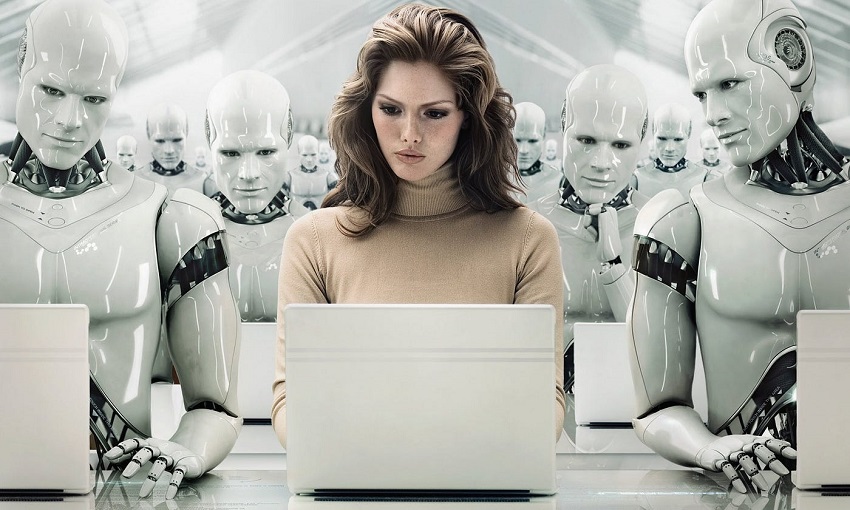
The rapid progress of AI raises ethical concerns and challenges that society must grapple with.
Bias and Fairness
AI algorithms learn from data, and if the data is biased, the AI can perpetuate those biases. This is particularly concerning in areas like hiring, where biased algorithms could lead to discriminatory outcomes. Striking a balance between the efficiency of AI and the fairness it must uphold is a critical challenge.
Loss of Human Control
As AI systems become more sophisticated, the question of control arises. How much autonomy should we grant AI, and when should humans intervene? Ensuring that AI remains a tool for humans rather than a replacement requires careful consideration and regulation.
Impact on Privacy
AI’s ability to process and analyze vast amounts of data can encroach upon individual privacy. Striking the right balance between utilizing AI’s capabilities and safeguarding personal information is essential to prevent breaches and protect user trust.
The Future of Humans in an AI World
The future painted by AI is not one of humans being replaced by machines, but rather one of collaboration and augmentation.
Augmented Intelligence
Augmented Intelligence is the concept of humans and AI working together to amplify each other’s strengths. This partnership allows humans to leverage AI’s computational power for complex tasks while contributing their emotional intelligence, creativity, and ethical judgment.
Continuous Learning
In an AI-driven world, the importance of continuous learning becomes even more pronounced. As AI handles routine tasks, humans can focus on acquiring new skills, exploring creative endeavors, and adapting to the ever-evolving landscape.
Conclusion
Artificial Intelligence is undoubtedly altering the trajectory of human progress. While challenges remain, the potential benefits of AI are vast. By fostering responsible AI development, upholding ethical standards, and embracing the collaborative potential of AI-human partnerships, we can pave the way for a future where both humans and AI thrive.
FAQs
Will AI completely replace human jobs?
AI is more likely to augment jobs rather than replace them. Routine tasks may be automated, but new roles that require human creativity and decision-making will emerge.
How can AI bias be mitigated?
Addressing AI bias requires diverse and unbiased training data, ongoing monitoring, and algorithm adjustments to ensure fairness.
Can AI think and feel like humans?
AI can simulate human-like thinking, but it lacks genuine emotions and consciousness. It operates based on algorithms and data.
What role will education play in an AI-centric future?
Education will be crucial for adapting to an AI-driven world. Lifelong learning and acquiring skills that complement AI capabilities will be essential.
Is AI development regulated?
AI development is an evolving field with increasing calls for regulation. Governments and organizations are working to establish guidelines to ensure safe and ethical AI deployment.
