
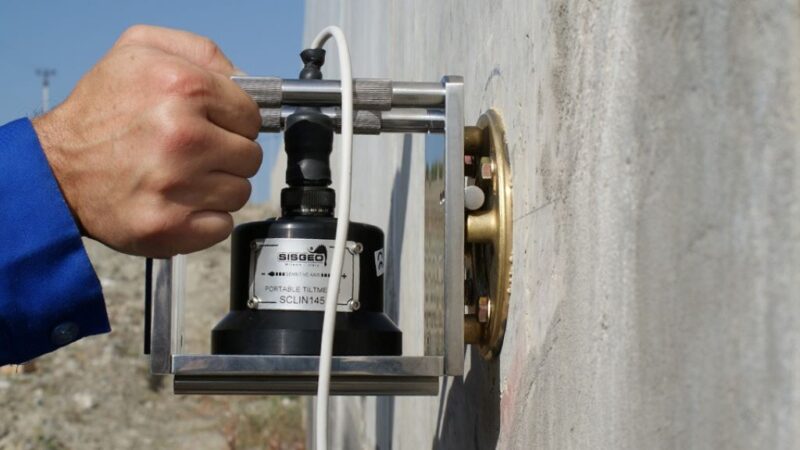
Tilt meters are vital tools in monitoring shifts and movements in structures, ensuring safety and stability in various engineering and construction projects. Understanding how does a tilt meter work is essential for anyone involved in infrastructure development, geotechnical engineering, or even natural disaster monitoring. In this article, we will break down the function of a tilt meter, how it works, and the technology behind it in a way that’s easy to grasp. We’ll also explore how it differs from other measuring instruments, such as a clinometer. Plus, we’ll include insights into practical use cases and real-world applications that might surprise you.
If you’re looking for a deeper dive into the technology behind these instruments, you can always explore Ltechuk, a company that specializes in precision measurement tools.
Understanding the Basics: What Is a Tilt Meter?
A tilt meter is an instrument used to measure the angle of tilt or inclination of an object relative to a reference point, typically the horizontal or vertical plane. The tilt meter detects minute shifts in the angle of structures, machinery, or land surfaces, providing data crucial for monitoring any movement, deformation, or stability issue. The instrument’s ability to measure these subtle shifts makes it indispensable for large-scale projects, such as dam monitoring, bridge construction, and even the assessment of earthquake damage.
How Does a Tilt Meter Work? The Core Mechanism
At its core, the tilt meter operates on simple physics—measuring the deviation in an object’s angle of tilt relative to the Earth’s gravitational pull. It consists of a sensing mechanism, typically a pendulum or an electronic sensor, that detects small shifts in the structure’s angle. Here’s a step-by-step explanation of how it works:
- Gravitational Sensing: The tilt meter detects changes in gravitational force caused by the tilt of the object. This sensor measures the angle of displacement from the Earth’s gravity and transmits the data to an electronic system.
- Angle Measurement: Using either mechanical components (such as a pendulum) or modern digital sensors, the tilt meter measures this angle and translates it into numerical data. The readings are often expressed in degrees or millimeters per meter (mm/m).
- Data Output: The tilt readings are then displayed on a screen or transmitted to a monitoring system for further analysis. These measurements help engineers assess whether any structure or surface has moved beyond acceptable limits, signaling potential risks.
Key Components of a Tilt Meter

A tilt meter’s construction depends on the type of instrument being used. Here are some of the main components that can be found in most tilt meters:
- Sensor Element: This is the heart of the device. It can be a mechanical pendulum, a liquid-filled capsule, or an accelerometer. Each sensor type has its unique way of detecting tilt.
- Readout Display: After the sensor measures the tilt, the data is processed and shown either on a digital display or through a computer system.
- Power Supply: Depending on the design, tilt meters may use batteries or be powered directly through an electrical connection.
- Casing: The casing ensures that the sensor remains undisturbed and protected from environmental factors like dust, water, or extreme temperatures.
Practical Applications of Tilt Meters
Tilt meters are used in a wide array of industries. From construction to geotechnical monitoring, they are invaluable in maintaining safety and structural integrity. Some of the key areas where tilt meters are used include:
- Structural Health Monitoring: Buildings, bridges, dams, and tunnels are often equipped with tilt meters to monitor any movement. Even slight shifts in tilt can indicate a problem, such as foundation settlement or material stress.
- Earthquake Detection: During and after seismic activity, tilt meters can detect tiny shifts in the earth’s surface. This data helps engineers assess the impact of the earthquake on nearby structures.
- Civil Engineering Projects: Tilt meters are commonly employed in large civil engineering projects, such as high-rise buildings or bridges, to track any shifts that might signal the need for maintenance or structural adjustments.
- Geotechnical Engineering: Tilt meters are used to monitor ground subsidence, landslides, or other earth movement events. These devices help identify potential risks to nearby structures, ensuring public safety.
Tilt Meter vs. Clinometer: What’s the Difference?
A tilt meter and a clinometer (sometimes known as an inclinometer) both measure angles of tilt, but their applications differ. While both tools detect shifts in angle, the clinometer typically measures the angle of a surface or line with respect to the horizon. In contrast, tilt meters are often used for more precise measurement of structural shifts over time.
If you’re wondering what exactly a clinometer does and how it compares to a tilt meter, it’s useful to understand the difference in their scope and applications. You can check out this article on what is a clinometer for more insights.
Types of Tilt Meters
Tilt meters come in different types, each designed for specific applications. The two main types include:
- Analog Tilt Meters: These use mechanical systems (such as a pendulum) to detect tilt. They are generally less expensive but less precise compared to their digital counterparts.
- Digital Tilt Meters: These use electronic sensors and accelerometers to detect changes in tilt. They are more accurate and capable of providing real-time data but come at a higher cost.
Common Uses of Tilt Meters in Various Fields
Tilt meters are particularly important for safety and monitoring in fields like:
- Construction: To monitor the foundations and structures during building projects.
- Mining and Excavation: For ensuring the safety of tunnels or large excavation projects.
- Aerospace: To track aircraft inclination and attitude during flight testing.
- Geology: For detecting small shifts in the earth, such as landslides, faults, and earthquakes.
Why Tilt Meters Are Crucial for Safety
Understanding how does a tilt meter work is key to realizing why these devices are indispensable in industries like construction and engineering. Even a slight shift in a structure could mean the difference between safety and disaster. In fact, tilt meters help identify potential issues before they become major problems.
For example, tilt meters in bridge construction detect tiny tilts that may signal structural weakness. This allows engineers to address issues proactively, preventing critical damage to the bridge.
The Technology Behind Tilt Meter Readings
The technology behind tilt meters has evolved significantly over the years. Today’s digital tilt meters use sensors that can record minute shifts with extraordinary precision. They rely on accelerometers and gyroscopes, which measure acceleration and angular velocity, respectively. These sensors are often coupled with microprocessors that process the data in real time, offering engineers timely insights into structural health.
Moreover, modern tilt meters can transmit data remotely, allowing for continuous monitoring without the need for manual data collection. This feature is particularly useful for projects that span vast areas, such as dam monitoring, where real-time data is crucial for ensuring safety.
People Also Loved: Staying Ahead in Animation: A Career Changer’s Guide to Essential Software and Tools
Conclusion
In the world of construction, civil engineering, and geotechnical monitoring, understanding how does a tilt meter work is crucial. Tilt meters provide an invaluable service by offering early detection of shifts in structural alignment, helping engineers and builders stay ahead of potential problems. Tilt meters provide accurate, real-time data essential for safeguarding lives and infrastructure. Whether you’re working on a skyscraper, monitoring seismic activity, or ensuring dam stability, they make all the difference.
By understanding the technology, applications, and importance of tilt meters, professionals can ensure that their projects remain safe and stable over time.
